Contains mild spoilers for Clair Obscur: Expedition 33.
I was very happy after finishing Expedition 33, and it left me with a few thoughts.
Chapter One
More and more world models for video and 3D have appeared recently. Game worlds that can be generated and interacted with in real time are getting close. Meanwhile, text and image modalities are already technologically mature, and quite a few “players” have already found what they need in canvases made of text and images.
The interaction costs of existing content are extremely high, so many of the players who do enter these painted worlds are people who, like Alicia, face all kinds of pain in reality, whether it comes from within themselves or from their relationships with others. In a painted world, each can ultimately become the Maelle they dream of being. If it lets them escape the pain of reality and experience the feeling of an ideal world, then even interaction costs that seem incomprehensibly high to an outsider no longer count for much.
Playing Expedition 33 at this particular moment deeply affected me. Everyone has a different reading of its endings; I think the premise of the game makes a happy ending impossible. More importantly, though, we may be at the very beginning of an era much like Aline entering the painting to numb herself. Once everyone has their own canvas, how will the world outside the painting change?
Chapter Two
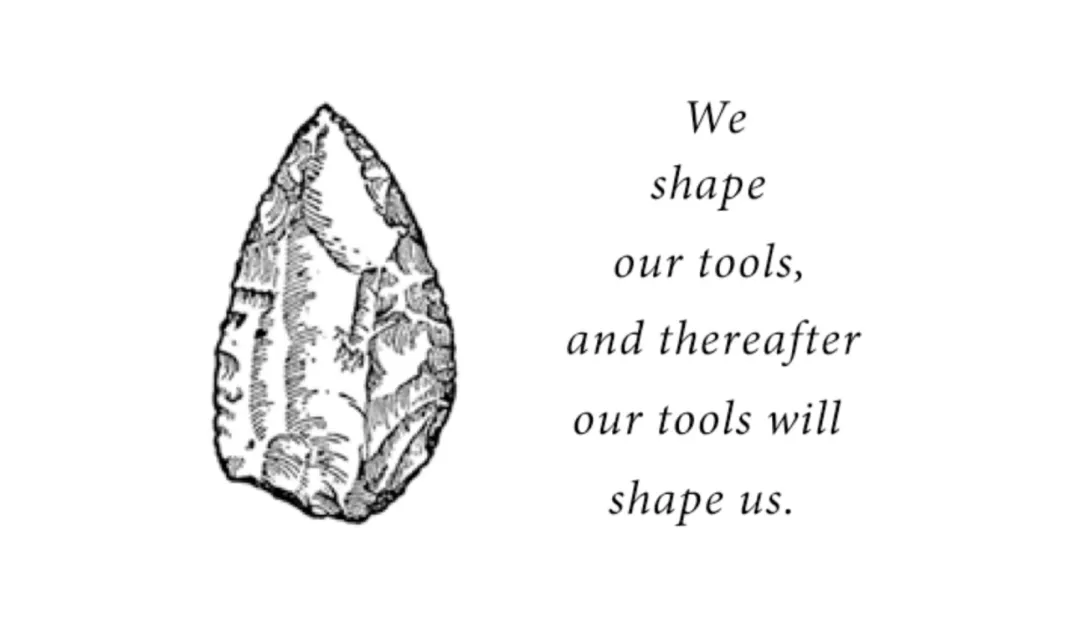
Media have the magical power to reshape the people who use them, and they do so imperceptibly. Over the past twenty years, the ways social media and content platforms have changed us have increasingly come back to haunt us. Netflix’s documentary The Social Dilemma brings together a collection of critical perspectives, but it came too late and had too little influence. The “elites” who create these products may be able to recognize the severity of the problem and keep their distance, but most ordinary people do not have that ability.
Leaving an addictive world is exceptionally difficult. When we were children, our parents told us not to get addicted to games; in this game, the members of a family become consumed by the painting one after another. Games and products such as Douyin are designed with all kinds of addictive mechanisms that exploit human weaknesses.
How will AI exploit those weaknesses this time?
Chapter Three
The previous era was about information. This time, I believe emotions are where AI will have its greatest impact on people.
Before playing Expedition 33, I had always considered emotional companionship to be both important and dangerous. The emotional cocoons AI provides can make us addicted to cheap, readily available emotional support. But emotions in the real world flow between people. To some extent, receiving emotional support requires us to empathize with another person, understand them and invest our own feelings. Once AI disrupts that balance, the flow of emotion becomes one-way. As a result, empathy may grow increasingly scarce in this era, making conflicts harder to resolve and wars harder to bring to an end.
After I finished the game, Alicia gave me another particularly important perspective: our pain does not come only from relationships with others. Often it comes from ourselves, from disliking our imperfect selves in the real world.
Over the past twenty years, when creating products, we gave little thought to the kind of people they would shape us into. Now we are seeing an unhappy result: more and more people are being trapped by AI in information cocoons. The next twenty years have already arrived. This time, AI will trap more people in emotional cocoons.
Chapter Four
In light of these thoughts, with the AI era already upon us, I think three things matter for us as individuals:
- Find a mission or a sense of meaning in our lives.
- Cultivate empathy and practice resolving conflicts in the real world. For young people, entering an intimate relationship may be the best way to develop empathy.
- Work through our inner pain. Chinese philosophy offers many approaches, provided we have enough life experience to draw on and reflect upon.
Is the trend toward humanity becoming worse truly inevitable? In the game, the Gommage also seems to have been an iron law ever since numbers first appeared on the Monolith. All it took to change the ending was a single line held in the hearts of the expeditioners:
For those who come after.
Why can’t we do the same?