Reading Kenya Hara’s Designing Design brought to mind the agents, agent infrastructure and creator economy I have been focusing on in my work lately. I felt that creative work has something in common across these fields, which inspired me to write this piece and share a few thoughts.
Sources of inspiration:
- Aman Khan, “Beyond vibe checks: A PM’s complete guide to evals”
- OpenAI Platform: “Reinforcement fine-tuning use cases,” “Evals design best practices” and “Graders”
- Sequoia Capital, “On AI Synesthesia”
- Linus Lee, “Prism: mapping interpretable concepts and features in a latent space of language” and “Synthesizer for thought”
- Kenya Hara, Designing Design
Eval
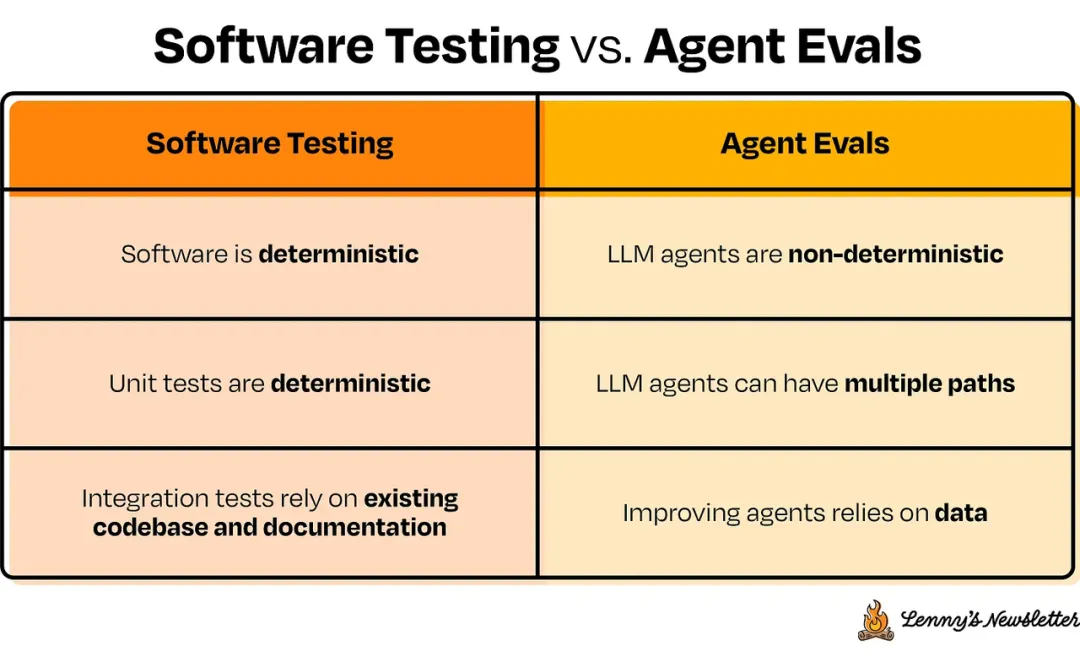
Traditional software unit tests are straightforward and highly deterministic, with clear pass/fail cases. Probabilistic systems built on LLMs, however, are nondeterministic and need more qualitative or open-ended metrics.
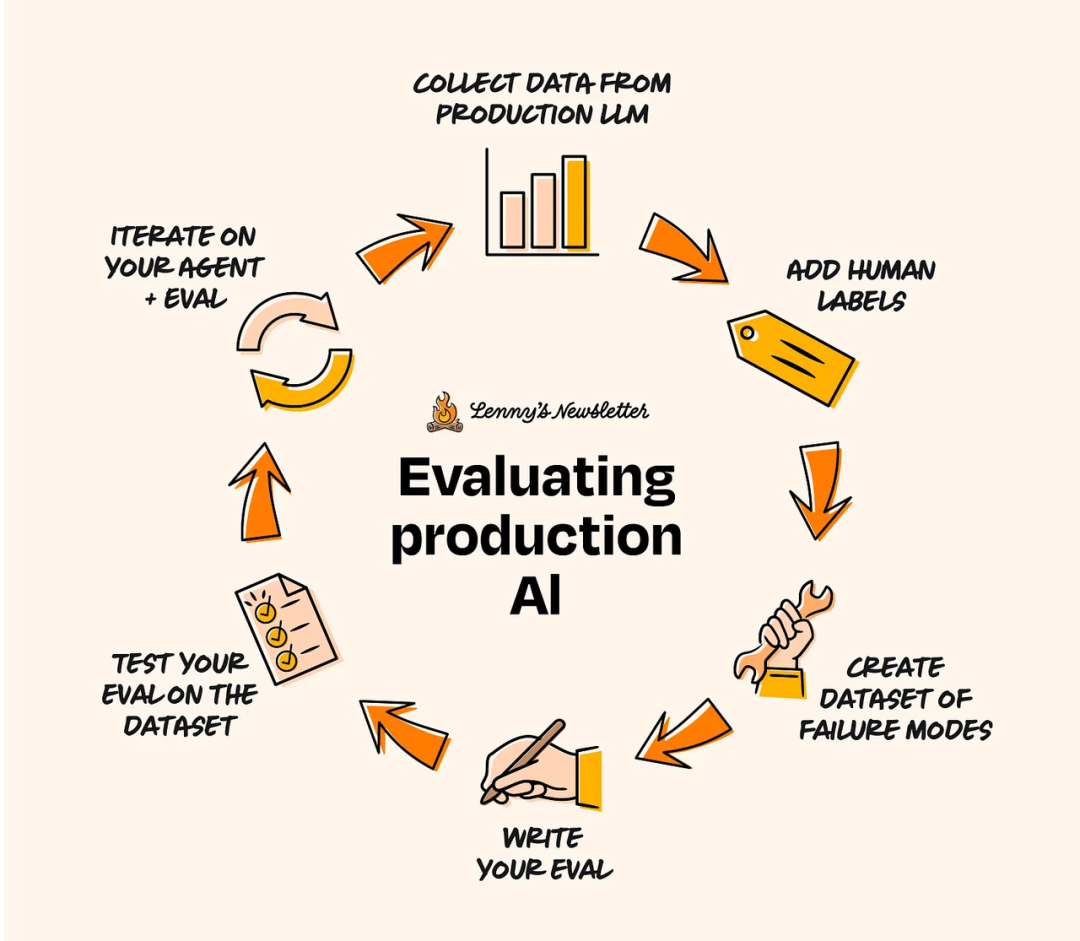
The entire iteration process starts with human-labeled data. This makes the initial labeling, which requires experts, even more important: the initial data determines the quality of the LLM-as-a-judge we create and ultimately influences the output distribution after reinforcement fine-tuning (RFT).
The hardest part is deciding which dimensions to evaluate and how to evaluate them. These dimensions enable many capabilities—for example, we can teach a model to call different tools. Yet defining them also requires exceptionally difficult thinking: it forces us to reason from first principles about the most fundamental elements of an outcome that deserves a score of 95–100. In the past, what was scarce was both the willingness to think through this overlooked question and the ability to execute, which is why results of that quality have always been rare. Agents help solve the execution problem. What remains scarce is the thought and evaluation that go into those fundamental elements.
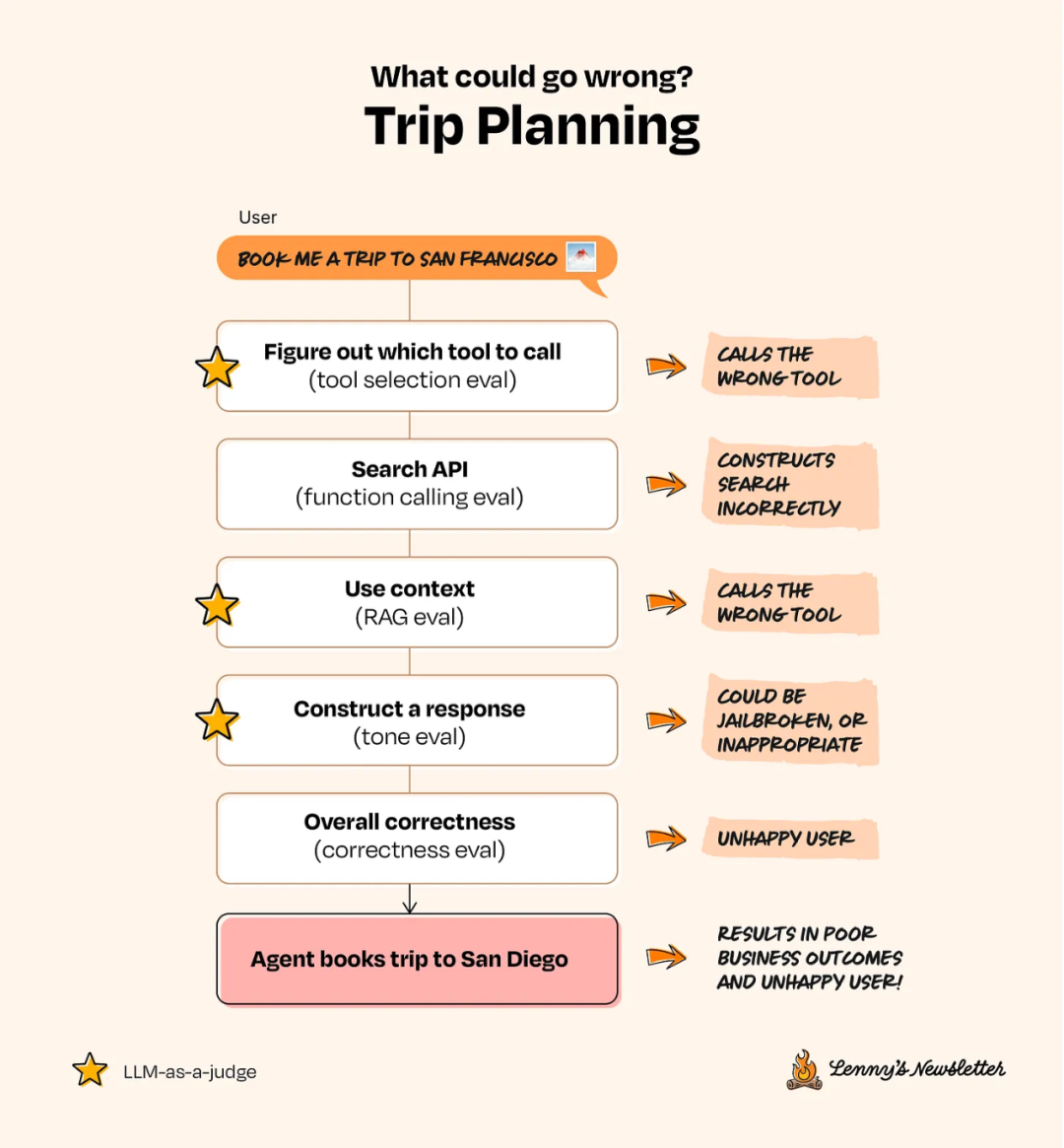
Evaluation itself is also very difficult. We need to define precisely what success and failure look like, translating nuanced user expectations into exact criteria that a model can apply.
OpenAI Platform: Expert-level reasoning in tax analysis
[+0.05] For correctly identifying Alex (33.33%), Barbara (33.33% → 20%), Chris (33.33%), and Dana (13.33%) ownership percentages
[+0.1] For correctly calculating Barbara's annual allocation as 26.67% and Dana's as 6.67% without closing of books
[+0.15] For properly allocating Alex ($300,000), Barbara ($240,030), Chris ($300,000), and Dana ($60,030) ordinary income
[+0.1] For calculating Alex's ending stock basis as $248,333 and debt basis as $75,000
[+0.05] For calculating Barbara's remaining basis after sale as $264,421
[+0.1] For calculating AAA before distributions as $1,215,000 and ending AAA as $315,000
[+0.1] For identifying all distributions as tax-free return of capital under AAA
[+0.1] For calculating Barbara's capital gain on stock sale as $223,720 ($400,000 - $176,280)
[+0.1] For explaining that closing of books would allocate based on actual half-year results
[+0.05] For identifying the ordering rules: AAA first, then E&P ($120,000), then remaining basis
[+0.05] For noting distributions exceeding $1,215,000 would be dividends up to $120,000 E&P
[+0.05] For correctly accounting for separately stated items in basis calculations (e.g., $50,000 Section 1231 gain)
What is scarce keeps changing. What does not change is that scarcity represents value. We need to recognize what is newly scarce.
Taste & Synesthesia
Eval is a scarce resource in building agents. But what, exactly, is scarce within eval?
Ultimately it comes down to taste.
There are countless dimensions through which we can understand the world. Perhaps taste is our definition of good and bad along each of those dimensions. Behind taste lie first-principles thinking and long-term “training.” Intellect is one very familiar form of taste—or perhaps “intellect” gives us a more concrete and measurable way to talk about it.
The tension is that each of us has limited time and energy. Usually, we can devote ourselves to developing taste in only one direction; all-round geniuses are extremely rare. Humans have always invented tools to enhance our intellect and taste. Sixty years ago, computing pioneer Douglas Engelbart was already thinking about augmenting human intellect, and the computer did indeed become a medium for that. How can AI help augment human intellect and taste?
In art and design, the arrival of multimodal models such as GPT-4o has given us a powerful medium. It raises the floor: we can bring our imaginations to life with simple natural language. More importantly, though, it will augment human intellect in an AI-native way. As Linus Lee discusses in his blog, machine learning gives us a way to automatically discover useful abstractions and concepts in data. If, drawing on interpretability research, we can uncover the patterns these models have learned, we will open up many new possibilities for insight into and understanding of the world.
Sequoia also discusses the concept of synesthesia in “On AI Synesthesia.” By connecting different modalities, 4o acts as a medium that helps us experience synesthesia. At the same time, the model’s ability to understand and generate across modalities becomes a tool for thinking across them. Thinking across modalities is bound to develop our intellect and taste in several modalities at once, deepening our understanding of the world as experienced through different senses.
But I believe that understanding the world is a necessary condition for creativity, rather than a sufficient one.
Creativity
How do we create something new?
This is a construction hoarding Kenya Hara designed for the Matsuya Ginza redesign project. The zipper is one of the designs that left the strongest impression on me in the entire book. I kept wondering how he had come up with something so creative. The book describes sensory information and our existing memories as key elements in the structure of a design. Hara also emphasizes the concept of redesign: approaching the world with curiosity, returning to a blank slate, and redesigning and creating new products. Redesign is creativity.
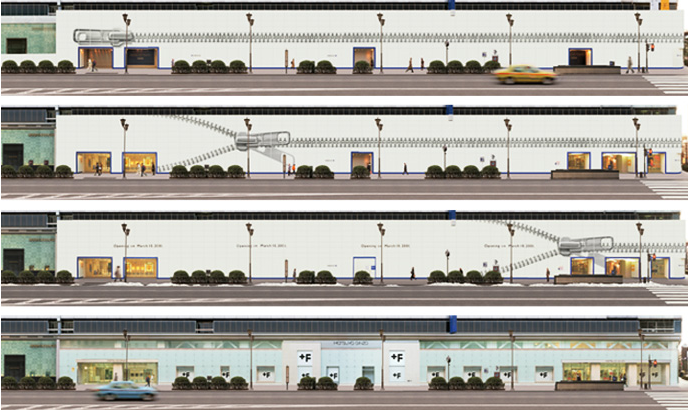
How do we redesign?
Kenya Hara writes in Designing Design:
The future is not one of the integers in a sequence: 9, 10, 11… It lies somewhere like 6.8 or 7.3. New designs that live within everyday life will be created by the intelligence that can see an infinity of numbers between any two consecutive integers.
For me, this passage suggests two things about the interactive interfaces we might use to design in the future:
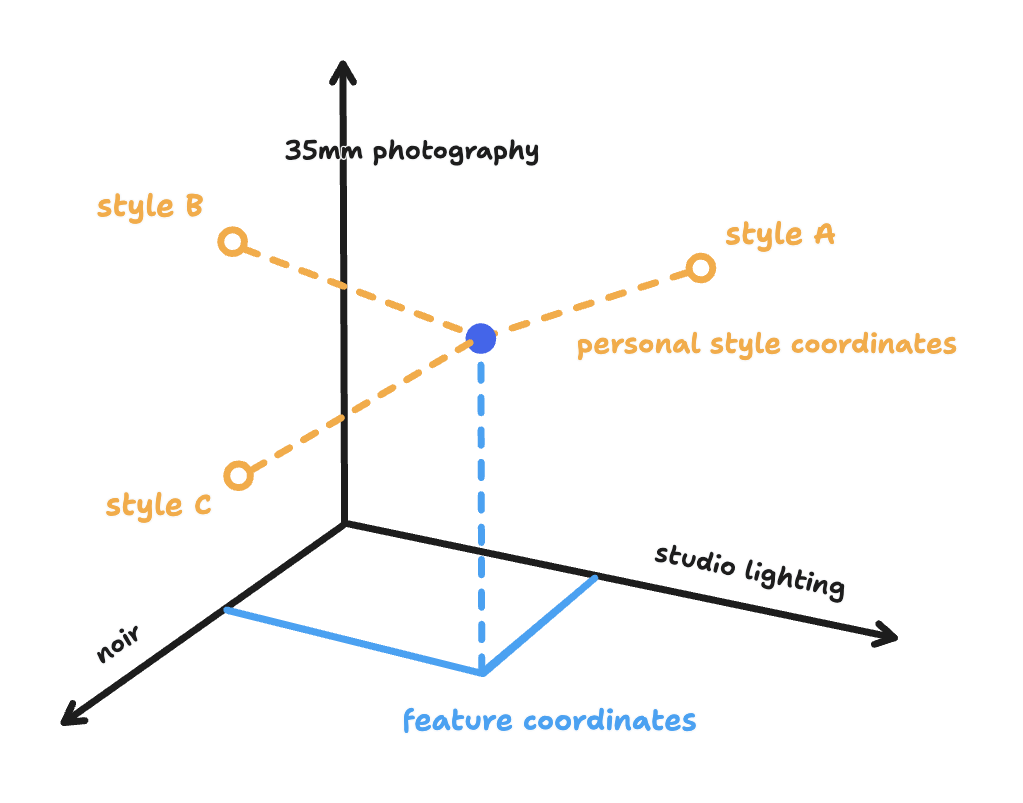
- We need a continuous interface in which to explore those fractional values in between. This gives a GUI an advantage over a LUI.
- Thinking in terms of vectors, 7.3 (the zipper hoarding) = 7 (the hoarding) × 0.7 + 8 (the zipper) × 0.3. We need an interface that lets us combine different elements and bring our imaginations together. It should also let us branch out and explore, getting rapid feedback on every change along the journey from 7 to 8, until we find the 7.3 we want.
A Final Thought
Design is an extremely complex concept, with many dimensions on which it can be judged, and there are many other tasks like it in the world. The opening line Kenya Hara writes in Designing Design is: “Verbalizing design is an act of design.” Whenever we convey our thoughts and feelings through a medium, something is inevitably lost. The data from those other dimensions, lost in the process, is also beyond what a model can learn.
What is lost is precisely what makes human feeling scarce. I believe that this part will always remain.